
Breaking (Corn)Bread
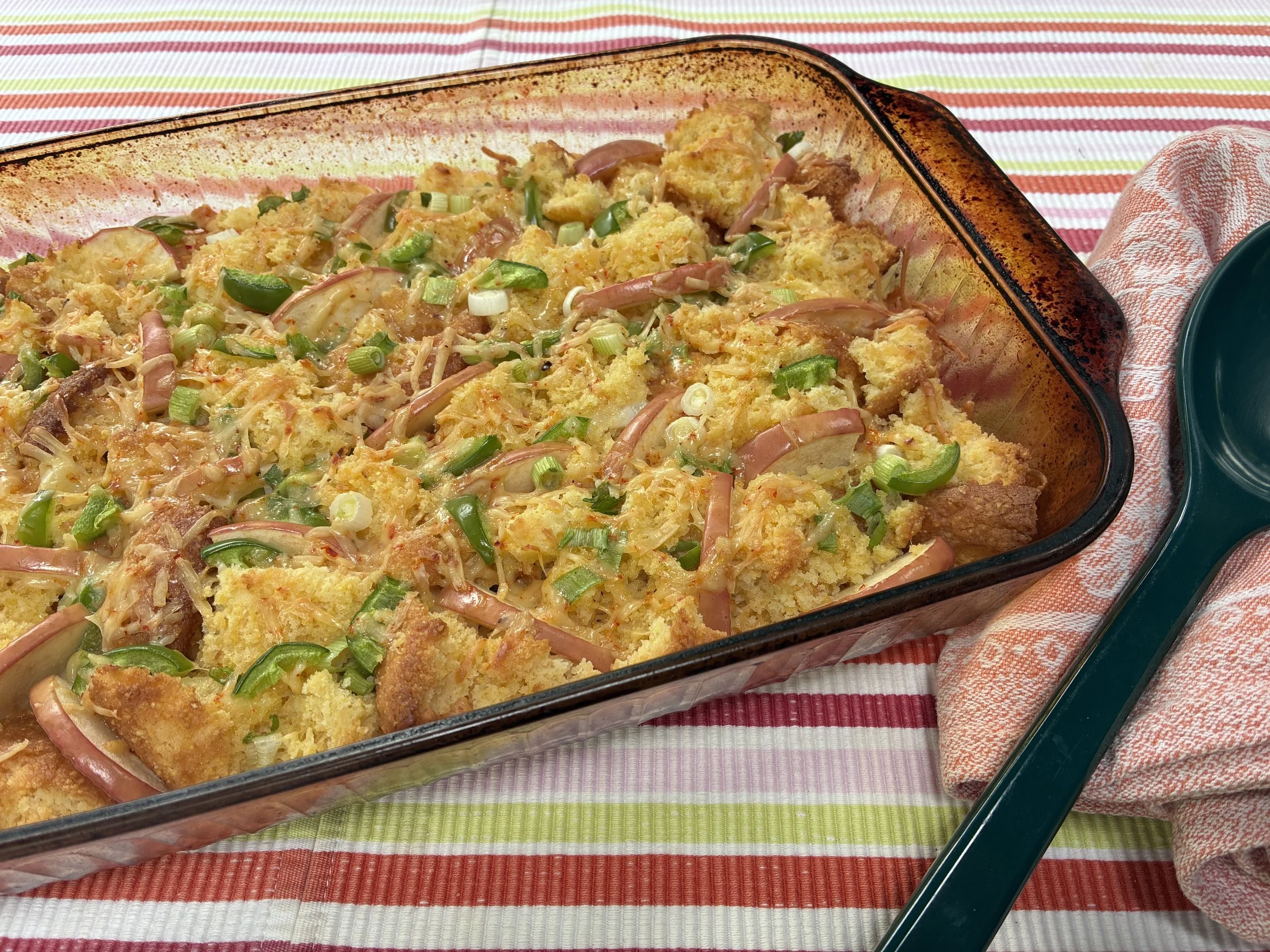
Although the holiday weekend is already upon us, there will surely be other summer gatherings at which you might serve the recipe I offered in this week’s Berkshire Eagle column. In fact, I could even see this cornbread bread pudding as a fun riff on Thanksgiving dressing (i.e., stuffing baked in a pan).
EVERYONE (ALMOST) IS AN IMMIGRANT
by Elizabeth Baer
July 4th is “the” summer holiday, at least here in the Northeast where we are not as likely to have warm weather in other seasons. This year it is also America 250, a milestone anniversary of the signing of the Declaration of Independence. While there is much to recognize about the colonists’ place in the historical shift from monarchy to democracy, this famous document is only a small piece of a significantly longer story.
As mentioned in my most recent Berkshire Eagle column two weeks ago, there is much to mourn about how the Indigenous peoples of the Americas have suffered and continue to suffer because of the arrival of Europeans. It is also worth remembering that people started crossing the Atlantic almost three hundred years prior to 1776. And in making that move, those people from Europe became immigrants.
Humans have always been on the move for any number of reasons, whether seeking something better or escaping something threatening. From a culinary perspective, when people arrive in a new place, they want to maintain a connection to what is familiar, even when access to customary ingredients makes that impossible. It’s easy to forget in our modern age that special food items were not just a click and a delivery truck away. In countless cookbooks, I have read time and again how immigrant families used easily acquired local ingredients to approximate flavors from home.
The same was true of the British who arrived as immigrants on these shores. Hasty pudding, as these folks knew it, was a common dish, a porridge made with wheat, yet wheat was not yet part of the agricultural pantheon in the Americas. The new immigrants began making something akin to hasty pudding with cornmeal (since corn was a staple crop of the Indigenous peoples). The resulting dish was dubbed with the regrettable name “Indian pudding,” a mixture of cornmeal, milk, and maple syrup or molasses, which, I have to admit, is not to my taste (regardless of my distaste for the name).
Instead, I created a bread pudding using cornbread, with a bit of both sweet and spice, to serve as a side dish for a cookout, made even easier by using store-bought corn muffins so you can spend less time in the kitchen and more time enjoying the short summer season.
CORN MUFFIN BREAD PUDDING
Serves 8-10
INGREDIENTS:
4-6 store-bought corn muffins, about 20-24 ounces total
½ medium apple, preferably a firm variety, cored and cut into quarter-round slices
1-2 jalapeños, seeded or not as desired, and chopped
2-3 scallions, white and light green parts sliced
2-3 ounces cheddar cheese grated
1 cup milk
2 eggs
1 tablespoon real maple syrup
⅛ teaspoon kosher salt
Several grinds fresh pepper
DIRECTIONS:
If you have time you can break up the muffins and let them dry out a bit, but it’s not necessary. (If you really have time to plan ahead, I suppose you could make homemade cornbread or corn muffins and use them, but just be sure you’re using the amount specified for the pudding.)
Preheat oven to 350°F and coat a 9”x13” baking dish with cooking spray for easy clean up.
Place the torn muffins and any crumbs into the prepared baking dish. Wedge the apple slices into the corn muffins throughout. Scatter the jalapeño, scallions, and cheddar over the top.
In a bowl combine the milk, eggs, maple syrup, salt, and pepper. Whisk to blend well. Pour over the corn muffins. Use a spatula to press down gently on the mixture.
Bake for 30 minutes until the mixture is no longer moist and the edges of the muffin pieces begin to take on some color. Let cool to serve warm or at room temperature.