
Eating Local
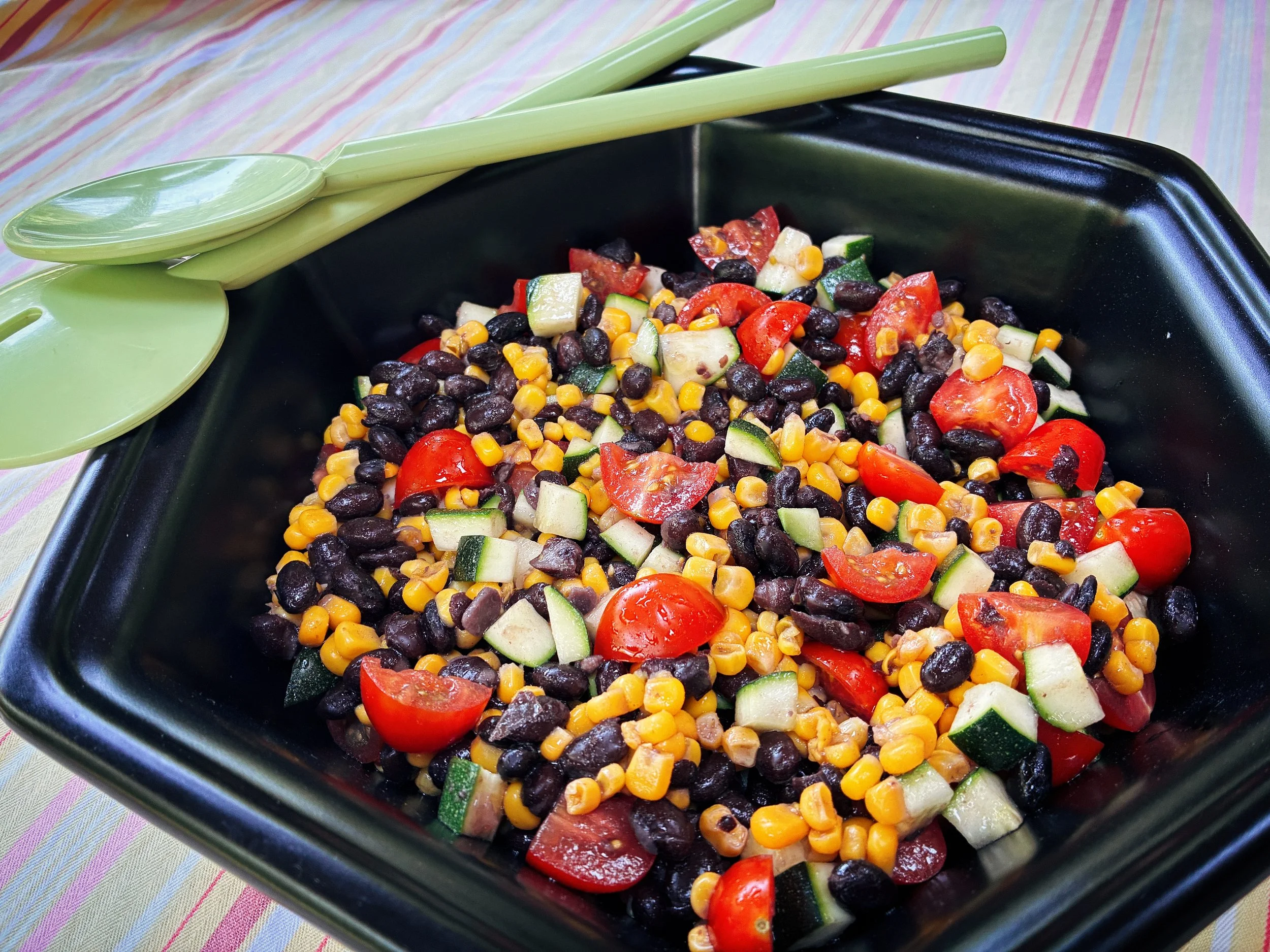
The recipe from this week’s Berkshire Eagle column discusses a very different sort of eating local that what that usually means. Here we’re remembering the Indigenous people who were here first, and considering plants native to the Americas for inspiration. Still, this recipe is well suited to the summer heat since it can be made without turning on the stove if you want, and it’s also vegan and gluten-free!
THREE SISTERS LEGACY
by Elizabeth Baer
Unless you’ve been living under a rock, you know this July 4th is a big one, because it’s “America 250.” But before we can talk about those who came and what they did, we have to talk about those who were already here.
The many Indigenous peoples who have inhabited the Americas for thousands upon thousands of years have both long, deep, rich histories, and enduring generational trauma from what happened after the arrival of Europeans. Sadly, much of this – both the extraordinary societies they had and the horrific destruction they suffered – remains on the margins of our history lessons and our historical awareness.
I recently took a road trip from Minneapolis to Seattle with a friend of mine, and in many places, we found museums and historic sites that provided some meaningful interpretation regarding inhabitants of the land over time. But these provided just a glimpse of a history much, much bigger. (For more information about these places, email me or find me on Substack where I wrote about the trip.)
One evening on that road trip my friend ordered a menu item called “Three Sisters Soup.” For many, if not most, Indigenous peoples of the Americas, the plants known as the three sisters – corn, beans, and squash – were central to their cuisine. As the saying goes, “What grows together goes together,” and these three crops were cultivated in such a way to benefit from a symbiotic relationship.
Corn takes a lot of nutrients from the soil, and legumes, which include beans, help return those nutrients to the ground. The tall corn plants act as a trellis of sorts for the bean plants to climb as they grow. And the squash, planted around the corn and beans, with their large leaves provide shade for the soil, keeping moisture in and weeds out.
Rather than a soup, since it’s summer, I decided to make a salad, and added another crop native to this hemisphere, tomatoes. In an effort to create a dish only using native ingredients, I made a dressing using an oil from an Indigenous plant (these include as sunflower, corn, or peanut oil), cranberry juice for the acid, and maple syrup for a touch of sweetness. Of course, to make it easier, you can use any basic vinaigrette.
I want to be clear, however, that this is not an Indigenous recipe, but merely one inspired by the three sisters. To explore this cuisine and history further, there are two excellent recent cookbooks that cover Indigenous cuisine profoundly and poignantly, with the kind of reverence and understanding that only an Indigenous person can offer: A Feather and a Fork: 125 Intertribal Dishes from an Indigenous Food Warrior by Crystal Wahpepah; and Turtle Island: Foods and Traditions of the Indigenous Peoples of North America by Sean Sherman.
THREE SISTERS (PLUS) SALAD
Serves 6
Note: Feel free to use a simple vinaigrette if preferred instead of making the cranberry vinaigrette given below
INGREDIENTS:
1¼ -1½ cups corn kernels (2 ears boiled or steamed, then cooled, and kernels cut from the cob, or frozen, thawed, and gently squeezed to drain of excess moisture)
One 15-ounce can black beans, drained and rinsed (or 1½ cups cooked black beans, drained)
1 small zucchini, about 6 ounces, seedy core discarded, cut into ¼-½ inch cubes
10-12 cherry or grape tomatoes halved, or quartered if large
Cranberry Vinaigrette:
2 tablespoons cranberry juice
½ teaspoon pure maple syrup
3 tablespoons sunflower, corn, or peanut oil, or other neutral oil
Salt to taste
DIRECTIONS:
Combine the corn, beans, zucchini, and tomatoes in a bowl.
In a small measuring cup, whisk together the cranberry juice and maple syrup. Slowly pour the oil in while whisking to emulsify.
Pour the dressing (or any simple vinaigrette) over the vegetables and toss to combine. Taste for salt. Serve room temperature or cool, but not cold.