
On the Lamb!
There’s a chill in the air, which means it’s time to shift our cooking to the oven. A little heat and some aromatic spices give the lamb braise in this week’s Berkshire Eagle its flavorful warmth as the days turn cooler.
STICK YOUR NECK OUT
by Elizabeth Baer
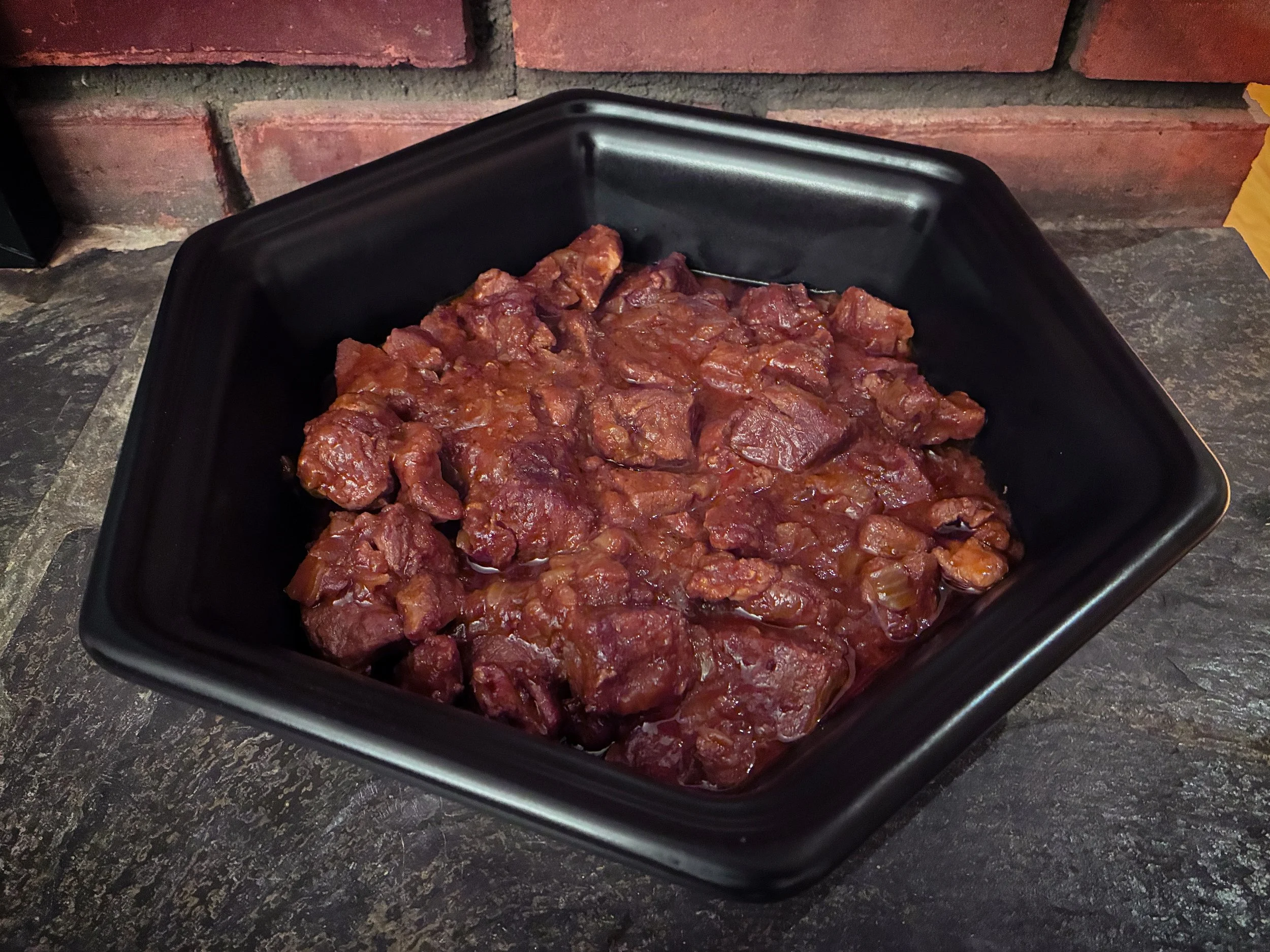
About a year ago, we bought half a lamb from Off the Shelf Farm in Great Barrington. (Sadly, they are no longer offering a half lamb, but they still offer cuts of lamb and other meats and eggs at farmers markets and on their website.) When we mentioned it to our kids, at least two of them laughed and said, “Which half?!” I’m not sure what they were thinking, but I replied, “I don’t know whether it’s the right side or the left side, but the various cuts are all in the freezer.”
Whichever half it was, we got a lamb neck. Not half a neck, but a whole neck. Lucky us! I had never cooked that cut of meat, but I knew that it would be well-suited to a long, low, slow braise.
I poked around the pantry to get inspiration, and I spied a jar of harissa paste. Harissa, an aromatic spice blend from North Africa, primarily Tunisia, can come as a dry blend of spices or as a paste, and it has become popular throughout the northern and eastern Mediterranean world. It does have some heat, but the spiciness will vary depending on the brand. Moderate the amount you use based on your preference.
My braise, in addition to the more traditional paste harissa that I found in my pantry, included some other spices, tomato purée, and stock to keep the meat moist. I knew immediately that I would want to share it in a future column, and I also wanted to make it more accessible, since it’s not always easy to source a lamb neck!
So I recently made it again with two pounds of lamb stew meat, and it was just as good, and I’m sure it would work with lamb shanks as well. Just be sure to serve it with something like rice or couscous to soak up the juices!
HARISSA BRAISED LAMB
Serves 4, can be doubled
INGREDIENTS:
1 garlic clove minced or through a press
1 teaspoon harissa paste
½ teaspoon ground cumin
½ teaspoon ground cinnamon
2-3 tablespoons extra virgin olive oil, plus more if needed
2 pounds lamb stew meat (see note for other options)
Kosher salt
Fresh ground pepper
1 onion, about 8 ounces, chopped
½ cup tomato purée or passata (any extra in the container can be frozen for later use)
2 cups stock (chicken, lamb, or vegetable; dilute if beef), plus more, or water, as needed
DIRECTIONS:
Preheat the oven to 300°F. Place the garlic, harissa, cumin, and cinnamon together in a small cup so you will be able to add them all at the same time more easily.
Heat olive oil in medium Dutch oven over medium-high heat until shimmering. Try to use a size that will hold the meat with just a bit of room to spare. Blot lamb dry and season with salt and pepper. Brown pieces on all sides. You will probably have to do this in batches in order to get a good sear, otherwise the pieces will steam and won’t brown as nicely. Remove the pieces from pot into a bowl.
Add onion and another pinch of salt and sauté until softened. There should be enough fat in the pot, but you can add a bit more olive oil if it seems too dry. Once the onion has softened, add the garlic, harissa, cumin, and cinnamon. Stir briefly into the onions. Add about ½ cup stock to scrap up any bits stuck to the bottom of the pot. Add tomato purée and remaining stock. Return lamb to pot. If needed, add more stock or water to come almost to the top of the meat, but it shouldn’t be submerged.
Cover the pot. If the lid doesn’t cover the pot tightly, add a piece of foil between the pot and the lid to create a tighter seal. Allow to braise, covered, in the oven for about 2 hours, until the meat is tender. Check every 30 minutes or so to make sure the liquid almost covers the meat. Add more stock or water if necessary.
As with any similar recipe, this tastes even better made a day ahead, cooled and kept in the refrigerator, and reheated for serving, but it will also be delicious served immediately.
Note: I am confident this recipe will work with other cuts, such as lamb neck, shanks, or even a boneless leg of lamb cut into pieces. No matter what cut you use, be sure the liquid almost covers the meat when it goes in the oven, and check periodically, adding more liquid if too much has evaporated. With larger cuts, such as a neck or shanks, turn the piece(s) every 30 minutes while in the oven. If using a lamb neck, you will need to pull the meat from the bones for serving.