
Simple Gifts
When I made the recipe for this past week’s Berkshire Eagle column, there was no way Hank and I could eat it all in one sitting! Of course the leftovers went in the fridge, and I have to admit, it got better and better every day, and did not suffer from being reheated. It’s a great dish to assemble when things are (relatively) quiet, and then enjoy over several days when you’re too busy to make anything too involved.
CUCINA POVERA, MA RICCA
by Elizabeth Baer
Last month, I had the great good fortune to score a spot for the cooking class at Hilltown in Egremont, featuring Anita Di Pietro who was visiting from Melito Irpina, Campania, Italy.
Let me back up a bit. Rafi Bildner, who I’ve known since he was three years old, spent some time in this tiny Italian village, apprenticing at Antica Trattoria Di Pietro dal 1934 with Anita and her family, in preparation for opening his wonderful new restaurant. As a Latin teacher, I have spent quite a bit of time in Italy, and have many dear friends there, so it came as no surprise to me that Rafi quickly became fully absorbed into the Di Pietro family restaurant life, and that these people and this restaurant and region became very much a part of his soul. When I hear him recount how he would drive all over with Anita’s father, Enzo, buying ingredients for that day’s service, then work in the kitchen, watching the honor and reverence bestowed upon local produce and products, I know how he strives to maintain these principles at Hilltown.
Anita was the first in the family to have the chance to see Rafi here in the Berkshires at Hilltown. She came to the States along with Sarah Pompei, an American who has moved to Italy and works to promote the food, wine, and culture of Irpinia, this rural region of Campania, to travelers.
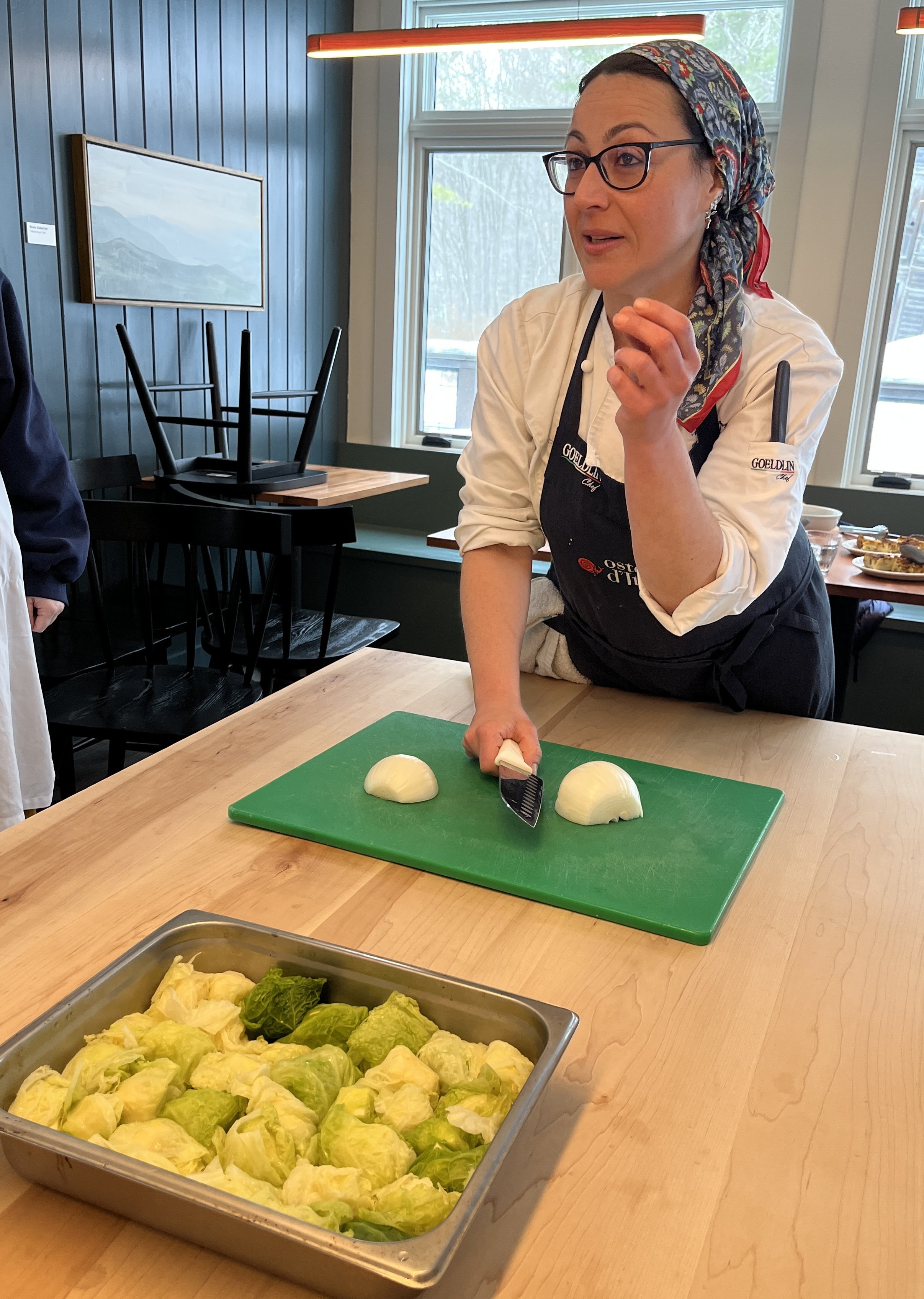
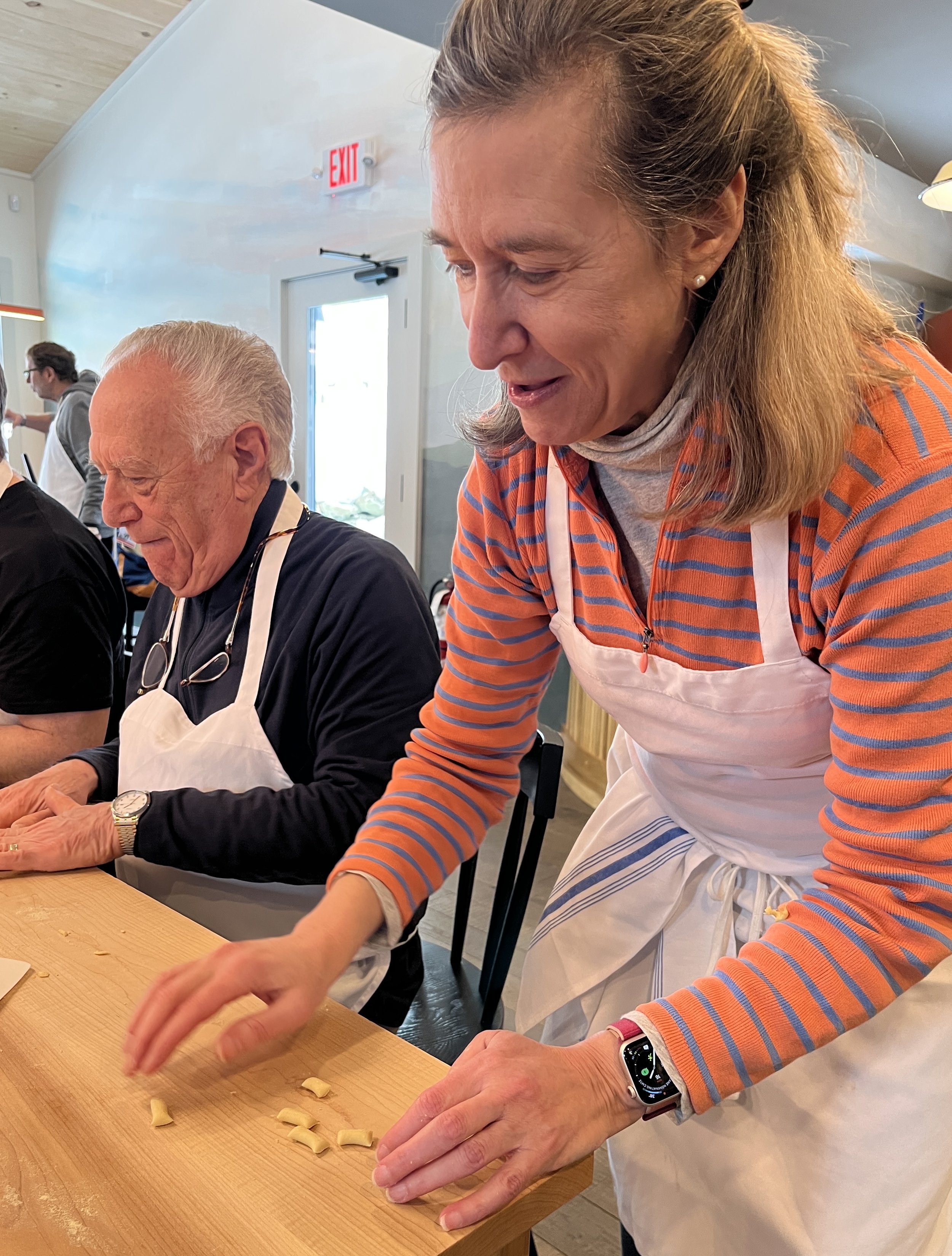
One Sunday night in February, Anita along with the Hilltown staff put on a fabulous 5+ course prix fixe dinner. My husband Hank and I could hardly manage to get up from the table after all the amazing food. The next morning, I headed back to the restaurant for the cooking class, where a small group of us learned how to make cicatielli (the local pasta, similar to cavatelli), and then to cook it with dark leafy greens similar to those found in Irpinia. We also made an item that Rafi has included on his menu, cabbage involtini, which involve wrapping chunks of cheese, covering them with a simple tomato sauce, and baking them in the oven.
If these recipes sound simple, they are. The culinary history of much of Italy really embodies cucina povera, poverty cooking. But when you source fresh, local ingredients, far from being poor, the cuisine is very rich, indeed. Although you may not be able to source scamorza cheese easily, even with provolone as a substitution, a dish of cabbage involtini can be a warm and filling vegetarian main course, or a wonderful complement on the plate with any number of meat recipes. (Rafi, committed to local products as much as possible, uses Hootenanny from McGrath Cheese in the Hudson Valley, and Amye Gulezian at High Lawn Farm suggests their Nostro Primo, although I haven’t had a chance to try it yet.)
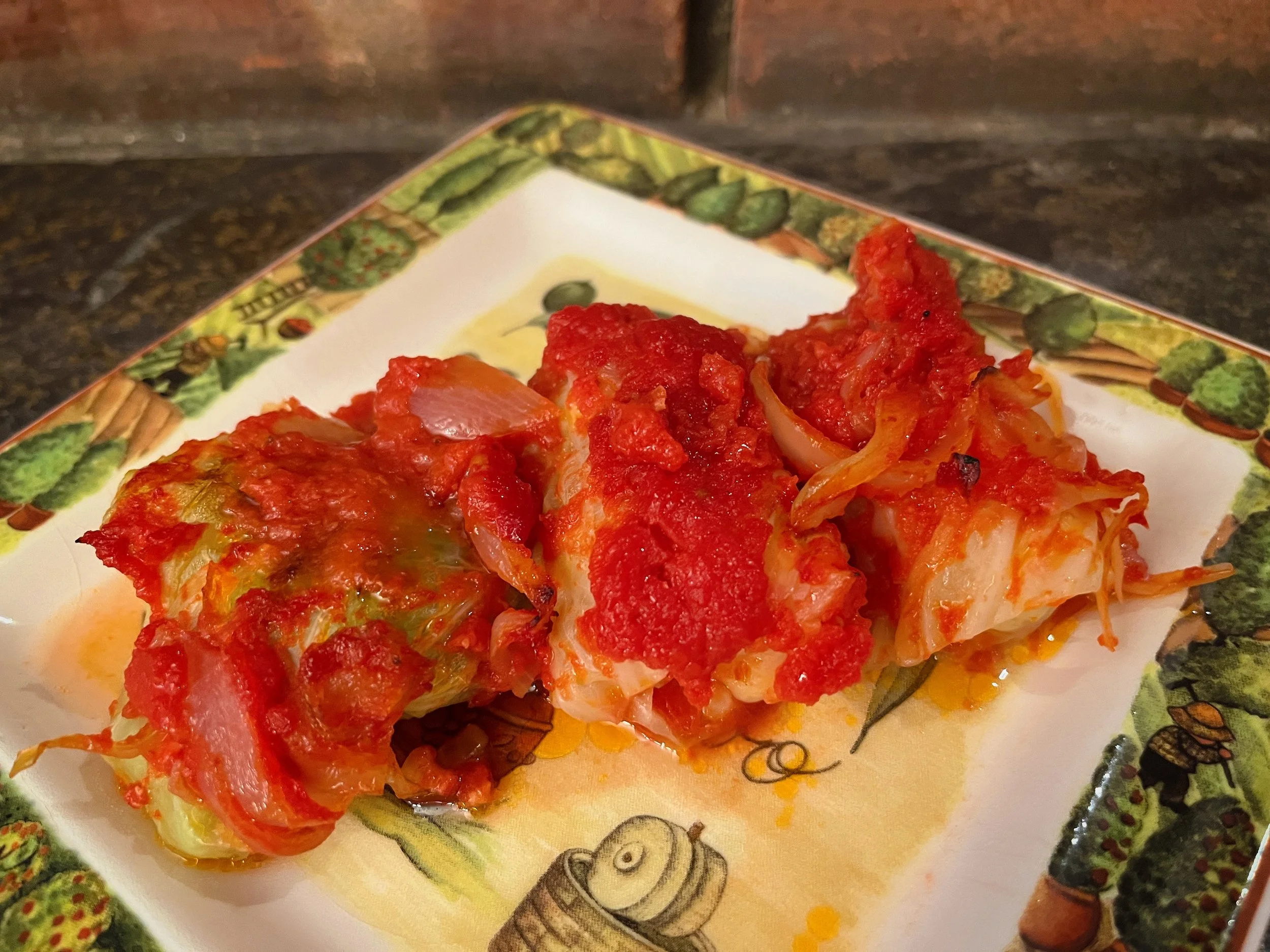
INVOLTINI DI VERZA (Cheese-stuffed cabbage rolls)
Makes 18-20 rolls
INGREDIENTS:
1 head savoy cabbage
2 teaspoons kosher salt, divided
6 tablespoons extra virgin olive oil
1 medium onion, peeled
One 28-ounce can or two 14-ounce cans good quality cherry tomatoes or crushed tomatoes
8 ounces scamorza cheese or other similar cheese such as provolone, cut into ¾-inch cubes
2 tablespoons grated pecorino
DIRECTIONS:
Place a large pot of water over high heat to bring to a boil. Meanwhile, remove and discard any dirty or wilted outer leaves from the cabbage and discard. Carefully remove the leaves, one at a time, keeping them intact as much as possible. Add 1 teaspoon salt to the water, then add the cabbage leaves and boil for five minutes. Drain in a colander and rinse the cabbage leaves with cold water to stop the cooking process. Set aside.
Make the sauce. Cut the onion in half through the root, then cut into thin slices lengthwise, from top to root end, discarding the root itself. In a medium saucepan, heat the olive oil over medium heat and add the onions. Allow to cook slowly over medium-low heat until the onions become meltingly tender, but not brown. Add the tomatoes and remaining 1 teaspoon salt. Simmer over a medium-low flame for about 10 minutes until the tomatoes have softened. (If using whole tomatoes or cherry tomatoes, you should be able to squish them easily at this point.) Taste and adjust salt if needed. Set aside.
Preheat oven to 400°F. If you are concerned about spilling, line a half sheet pan with foil to place under the baking dish.
Blot the cabbage leaves dry with a dish towel, and cut the thick rib out from each leaf. Place a cube of cheese on a cabbage leaf, fold the end and sides over the cheese, and roll it into a little package. With the larger cabbage leaves, it is possible to wrap a cube of cheese fully with just half a leaf. The wrapping doesn’t need to look fancy or perfect. Continue until you have used all the cheese. (You will likely have cabbage left over, due to some leaves that get torn or some that are just too small for wrapping. Any extra will be delicious chopped and sautéed in a bit of butter.)
Arrange the cabbage bundles in a baking dish large enough to hold them just a bit snugly but not tightly. Sprinkle the pecorino on top, and then ladle the sauce on top to cover. (If you have any extra sauce, depending on the size of the baking dish, save for another time or to serve on pasta.)
Bake in the oven (on the foil-lined sheet pan, if desired) until the top begins to brown, about 20 minutes. Allow to cool a few minutes before serving.